🧗 Nice Rack: Building the Right Climbing Rack
- Mr Beta

- Dec 6
- 2 min read
Why Your Rack Matters
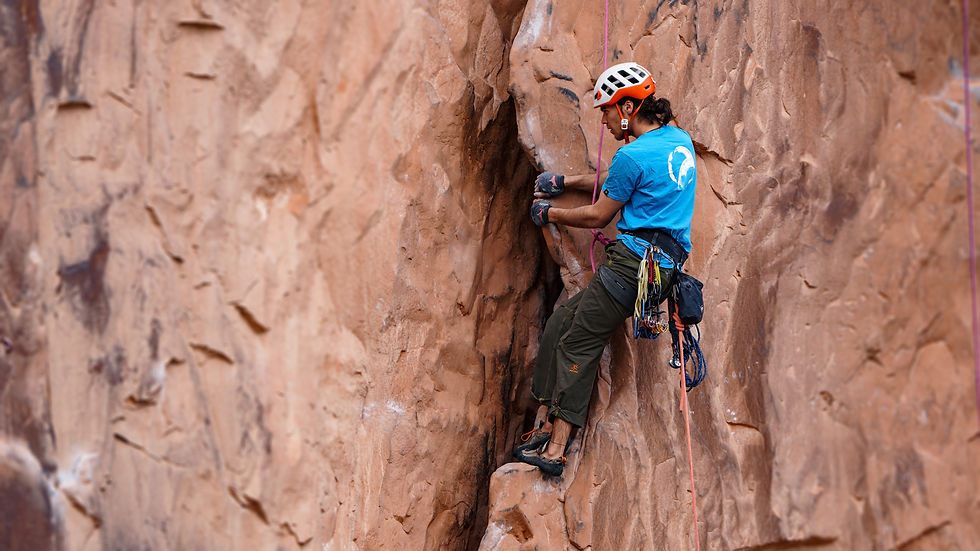
In traditional climbing, your rack is your lifeline. Unlike sport climbing, where bolts are pre‑installed, trad climbers carry and place their own protection. A well‑built rack balances safety, versatility, and efficiency—without weighing you down with unnecessary gear.
✅ What to Include in a Basic Rack
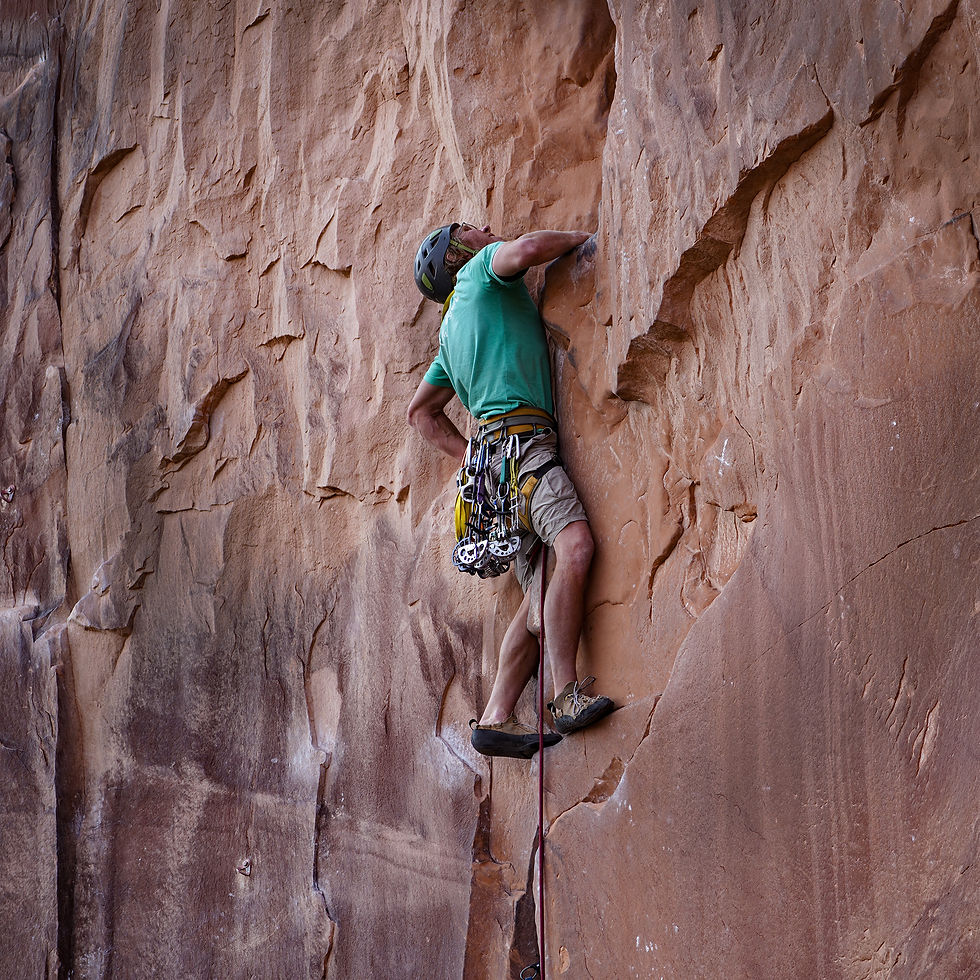
Nuts (10–12 pieces): Passive protection that fits into constrictions. A full set covers most placements.
Cams (6–12 pieces): Active protection for cracks. Start with sizes from about 0.5” to 3”. Add smaller or larger cams later as needed.
Quickdraws or Alpine Draws (10–12): Alpine draws (60–120 cm slings with carabiners) help manage rope drag on wandering routes. Quickdraws are fine for straight lines.
Carabiners: Locking and non‑locking for anchors, belay devices, and gear organization.
Slings & Cord: Useful for building anchors, extending placements, or equalizing protection.
Personal Gear: Harness, helmet, belay device, and shoes—your foundation before any rack.

❌ What You Can Skip (at First)
Oversized cams: Rarely needed unless climbing wide cracks or offwidths.
Triples in finger sizes: Only necessary for specific splitter routes.
Offset nuts or cams: Useful in pin‑scarred areas like Yosemite, but not essential everywhere.
Specialty gear: Hexes, tricams, or micro‑cams can wait until you know your local rock demands them.
⚠️ Risks & Considerations
Weight vs. safety: Carrying too much slows you down, but cutting corners can leave you unprotected.
Local terrain: Desert splitters, alpine granite, or sandstone cracks each favor different gear.
Partner racks: Combine gear with partners to cover more ground without duplicating everything.
Cost: Cams are expensive—build your rack gradually and prioritize versatile sizes first.
Final Pitch
A “nice rack” isn’t about owning every piece of gear—it’s about carrying the right mix for your climbs. Start with a balanced set of nuts, cams, and alpine draws, then expand as your climbing style and terrain demand. Skip the specialty gear until you know it’s essential.
A thoughtful rack keeps you safe, efficient, and ready for adventure.